

RNAi Therapeutics Market Size Expected to Reach USD 4.28 Bn by 2033
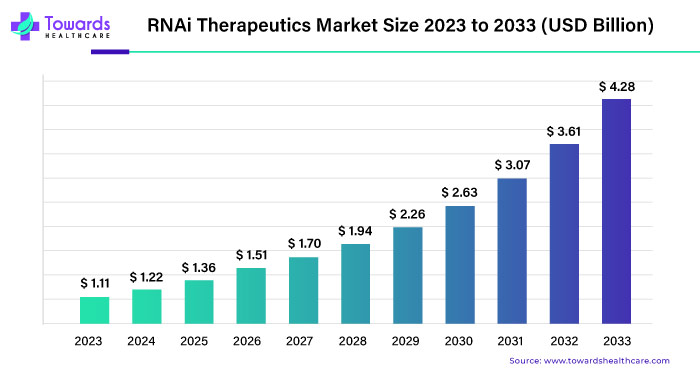
The global RNAi therapeutics market size is calculated at USD 1.22 billion in 2024 and is expected to reach around USD 4.28 billion by 2033, growing at a solid CAGR of 14.9% from 2024 to 2033.
Ottawa, May 15, 2024 (GLOBE NEWSWIRE) -- The global RNAi therapeutics market size was valued at USD 1.11 billion in 2023 and is predicted to hit around USD 3.61 billion by 2032, a study published by Towards Healthcare a sister firm of Precedence Research.
Download a short version of this report @ https://www.towardshealthcare.com/personalized-scope/5115
Insight Highlights:
- siRNA therapy leads the charge, holding a commanding 64% market share in 2023.
- Cancer remains the prime target, with oncology applications expected to continue their leadership over the forecast period.
- North America held the reins with a 41% market share in 2023.
The American Cancer Society's report forecasts a substantial increase in both new cancer diagnoses and related deaths for 2022, with approximately 1.9 million new cases and 609,360 fatalities anticipated in the United States. RNAi therapeutics offer potential management for the escalating incidence of cancer.
In December 2020, a company expanded its collaboration efforts, focusing on developing and selling RNAi drugs. They utilized their advancements in delivering siRNA drugs directly to target areas and their existing skills to create RNAi drugs for further treating tumors and neurological conditions. This move could lead to more widespread use of RNAi in diagnosing diseases at the molecular level and make RNAi a more effective treatment option, potentially driving growth in the RNAi market. RNAi (RNA interference) therapeutics use small RNA molecules to silence or regulate specific genes within cells. These molecules, such as small interfering RNA (siRNA) or microRNA (miRNA), target messenger RNA (mRNA) to prevent the production of specific proteins, thereby influencing gene expression.
Recent News
-
On 22nd December 2021, the FDA gave the green light to Novartis' Leqvio (inclisiran), a new treatment to lower cholesterol. It's the first of its kind and only requires two doses each year to keep cholesterol levels low. Leqvio uses something called small interfering RNA (siRNA). Studies show it can reduce bad cholesterol (LDL-C) by up to 52% compared to a fake treatment (placebo) for certain people with heart disease who are already taking the maximum dose of statins.
RNAi therapeutics hold promise for treating various diseases, including genetic disorders, viral infections, and certain types of cancer. They can be delivered directly to target cells or tissues to modulate gene expression, offering a particular and potentially practical treatment approach.
One significant advantage of RNAi therapeutics is their ability to target disease-causing genes with high precision, potentially minimizing off-target effects and improving treatment outcomes. Additionally, RNAi technology enables the development of personalized medicine approaches tailored to individual patients' genetic profiles. RNAi therapeutics represent a cutting-edge approach in medicine with the potential to revolutionize the treatment of a wide range of diseases by targeting specific genes involved in their development and progression.
RNA interference (RNAi) therapeutics have garnered significant attention in clinical research due to their potential to revolutionize disease treatment. Numerous clinical trials are underway, focusing on various applications of RNAi technology across different medical conditions. These trials encompass genetic disorders, viral infections, neurodegenerative diseases, and cancer, among others. The precision and specificity of RNAi therapeutics offer promising avenues for targeted treatment approaches, addressing the underlying molecular mechanisms of diseases. As these clinical trials progress and demonstrate efficacy and safety, they pave the way for the market growth of RNAi therapeutics. Moreover, advancements in delivery systems and RNAi molecule design contribute to the expanding landscape of RNAi-based treatments. With ongoing research and development efforts, RNAi therapeutics hold the potential to become a cornerstone in modern medicine, offering customized and practical solutions for a wide range of diseases.
You can place an order or ask any questions, please feel free to contact us at sales@towardshealthcare.com
Rising Incidence of Cancer Patients
According to the American Cancer Society, around 1.92 million new cases of cancer and 609,360 deaths occurred in the United States alone in 2022. Globally, this adds up to a staggering 9.6 million lives lost. With the growing number of cancer diagnoses worldwide, there's a heightened need for groundbreaking treatments. RNA interference (RNAi) technology has emerged as a hopeful strategy in battling cancer.
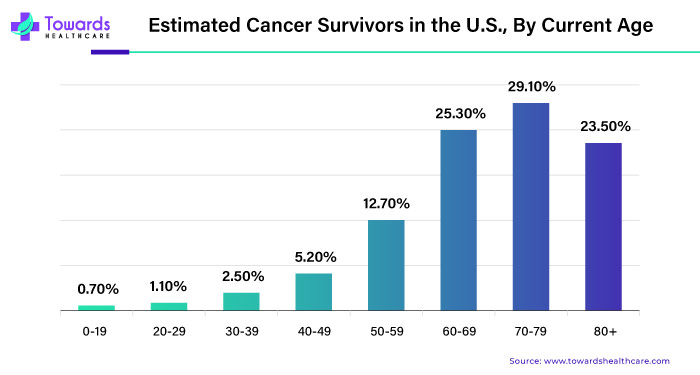
Cancer is a disease where cells grow uncontrollably, forming tumors that can spread to other parts of the body. It's a serious health problem affecting millions of people globally.
Scientists have been exploring new ways to treat cancer more effectively. One such approach is using RNA interference (RNAi) technology. RNAi is a natural process in our bodies that helps regulate genes. By harnessing this process, scientists can develop treatments targeting the genes involved in cancer growth.
For instance,
-
In November 2023, Alnylam Pharmaceuticals invented Givlaari (givosiran), which the FDA approved. Givlaari (givosiran)treatment. They are designed for acute hepatic porphyria (AHP), a metabolic disorder caused by a specific genetic syndrome. Unlike treating cancer directly, Givlaari targets the liver X gene associated with AHP.
These treatments, known as RNAi therapeutics, send small pieces of RNA to the cancer cells. Once inside the cells, these RNA pieces interfere with the genes responsible for cancer growth, essentially shutting them down.
One of the reasons why RNAi therapeutics are gaining popularity is because they offer a more targeted approach compared to traditional cancer treatments like chemotherapy. Conventional therapies often affect both cancerous and healthy cells, leading to various side effects. RNAi therapeutics, on the other hand, can specifically target cancer cells, minimizing damage to healthy tissues and reducing side effects.
As a result, the RNAi market is proliferating as more research is being done to develop and improve RNAi-based treatments for cancer. Pharmaceutical companies, research institutions, and startups invest heavily in this area, hoping to bring new and effective treatments to needy patients. The rising incidence of cancer has fueled the growth of the RNAi market, offering new hope for patients and doctors alike in the fight against this devastating disease.
Customize this study as per your requirement @ https://www.towardshealthcare.com/customization/5115
Progress in RNAi Clinical Trials and Preclinical Studies Shows Promising Results
The RNAi market undergoes growth across distinct developmental phases, from preclinical research to the approval of drugs for commercial use. In the preliminary preclinical research stage, scientists delve into the potential applications of RNA interference (RNAi) technology for therapeutic purposes. This phase involves rigorous laboratory experiments and animal studies aimed at unraveling the mechanisms of RNAi, crafting RNAi molecules, and assessing their effectiveness and safety profiles. As advancements in RNAi technology and preclinical research yield promising outcomes, there's a surge in interest and investment in RNAi-based therapeutics, propelling market expansion.
Transitioning from preclinical research, RNAi therapeutics progress into clinical trials to evaluate their safety, efficacy, and tolerability in human subjects. These trials unfold across multiple phases, commencing with Phase I, primarily focused on safety assessments, followed by Phase II, which delves into efficacy evaluations, and culminating in Phase III, where large-scale efficacy and safety studies are conducted. Positive results from these clinical trials demonstrate the potential of RNAi-based drugs to combat various diseases, further fueling market growth. Additionally, as RNAi therapeutics advance through clinical development and exhibit promising outcomes, they attract augmented investment and partnership opportunities from pharmaceutical companies and investors.
RNAi-based Treatments Currently in Phase 3 Clinical Trials
| Sr. No. | Target Gene | Drug Name | Route of Administration | Indication | Manufacturing Company | Reference |
| 1. | ALAS1 | ALN-AS1 (Givosiran) | Subcutaneous | Acute Hepatic Porphyrias | Alnylam Pharmaceutical | NCT03338816, |
| 2. | AT | Fitusiran ALN-AT3SC (Fitusiran) |
Subcutaneous | Hemophilia A or B | Genzyme, a Sanofi Company | NCT03417102/03417245, Completed |
| 3. | TP53 | QPI-1002 (Teprasiran) |
Intravenous | Prevention of acute kidney injury after cardiac surgery | Quark Pharmaceuticals | NCT03510897, Terminated |
| 4. | TRPV1 | SYL1001 (Tivanisiran) |
Periocular | Sjogren’s Syndrome, Dry eye (Eye) | Sylentis | NCT04819269, Recruiting |
| 5. | TRPV1 | SYL1001 (Tivanisiran) |
Periocular | Moderate to severe eye disease | Sylentis | NCT03108664, Completed |
Upon successful completion of clinical trials and regulatory approval, RNAi therapeutics undergo a pivotal transformation from experimental treatments to approved drugs. These drugs are then commercialized and accessible to patients to treat specific diseases. Approved RNAi drugs are pivotal in driving market growth by furnishing novel treatment options for individuals grappling with unmet medical needs. Furthermore, as the tally of approved RNAi drugs escalates, the market broadens, ushering in opportunities for further research, development, and innovation in RNAi-based therapeutics. With continued progress in research and development efforts, the RNAi market is poised for further expansion, promising innovative solutions for addressing a diverse array of diseases.
Utilizing RNAi Therapeutics in Clinical Settings Encounters Hurdles in Delivery
RNA interference (RNAi) is a natural biological process that regulates gene expression by suppressing the translation of specific messenger RNA (mRNA) molecules. The discovery of RNAi has led to the development of RNA-based therapeutics, particularly small interfering RNA (siRNA) and microRNA (miRNA), as potential treatments for various diseases, including cancer, viral infections, genetic disorders, and neurodegenerative diseases.
The clinical translation of RNAi therapeutics has encountered several challenges related to delivery. These challenges primarily stem from the inherent properties of RNA molecules and the physiological barriers they encounter in vivo. Additionally, RNA molecules are susceptible to degradation by nucleases in bodily fluids such as blood and tissue extracellular spaces, limiting their stability and bioavailability at the target site. Furthermore, RNA molecules may interact with unintended mRNA targets, leading to off-target effects and potential toxicity due to sequence similarity or nonspecific interactions with cellular components.
Introducing RNA molecules from outside the body can activate the immune system, mainly through pattern recognition receptors like retinoic acid-inducible gene I (RIG-I)-like receptors (RLRs) and Toll-like receptors (TLRs). This immune response may lead to inflammation, the release of cytokines, and the removal of the therapeutic RNA, ultimately decreasing its effectiveness.
Moreover, efficient delivery of RNA molecules into target cells is critical for therapeutic efficacy, but they face barriers in crossing cellular membranes composed of hydrophobic lipid bilayers. Once inside the cell, RNA molecules must navigate through intracellular compartments to reach their site of action, such as the cytoplasm or nucleus.
To overcome these delivery challenges, researchers have developed various strategies and delivery vehicles, including lipid nanoparticles (LNPs), polymer-based nanoparticles, viral vectors, chemical modifications of RNA, and targeted delivery strategies. These approaches aim to protect RNA molecules from degradation, enhance their specificity, reduce off-target effects and immune activation, and improve their cellular uptake and intracellular trafficking. Addressing the challenges associated with RNAi therapeutics delivery is essential for realizing their full potential in clinical applications. Continued research efforts to develop innovative delivery platforms and optimize delivery strategies are crucial for advancing RNA-based therapies and improving patient outcomes.
Browse More Insights of Towards Healthcare:
- The ambulatory surgical center market accounted for USD 94.57 billion in 2022 and is projected to reach to USD 167.1 billion by 2032, growing at a CAGR of 5.66% from 2023 to 2032.
- The global 5G healthcare market size to grow from USD 41.89 billion in 2022 to reach around USD 266.60 billion by 2032, expanding at a double digit CAGR of 20.82% between 2023 and 2032.
- The global dental services market was valued at for USD 432.1 billion in 2022 and is expected to reach USD 699.7 billion by 2032, growing at a CAGR of 4.93% from 2023 to 2032.
- The global AR and VR in the healthcare industry was at USD 1.57 billion in 2022 and expected to hit USD 13.74 billion by 2032, at a double digit CAGR of 24.81% from 2023 to 2032.
- The global blockchain in healthcare market size reached USD 0.76 billion in 2022 and is projected to hit around USD 14.25 billion in 2032, expanding at a healthy CAGR of 34.02% from 2023 to 2032.
- The global anesthesia drugs market was valued to grow from USD 0.46 billion in 2022 to reach an around USD 1.53 billion by 2032, at a expanding 13.3% CAGR between 2023 and 2032.
- The global AI in life sciences industry size was at USD 1.56 billion in 2022 and it is predicted to reach around USD 9.80 billion by 2032 with a double digit CAGR of 20.21% from 2023 to 2032.
- The global AI in drug discovery market was accounted at USD 1,495.28 million in 2022 and is predicted to reach around USD 14,518.68 million by 2032, at a healthy CAGR of 20.08% from 2022 to 2032.
- The global asthma and COPD drugs market size estimated at USD 37.22 billion in 2022 and is projected to reach USD 61.54 billion by 2032, with a growing 5.01% CAGR from 2023 to 2032.
- The global medical aesthetics market was valued at USD 5.86 billion in 2022 and is expected to reach USD 7.94 billion by 2032, expanding at a CAGR of 3.29% from 2023 to 2032.
Geographical Landscape
North America, particularly the United States, is a significant hub for RNAi therapeutics development and commercialization. The region benefits from a robust biotechnology sector, vital research infrastructure, and supportive regulatory agencies like the Food and Drug Administration (FDA). Key players in the RNAi therapeutics market, including biopharmaceutical companies and academic institutions, are advancing RNAi-based treatments for diseases such as cancer, viral infections, and genetic disorders. The presence of well-established healthcare systems and high healthcare expenditure levels contribute to the adoption of innovative therapies, including RNAi therapeutics, in North America.
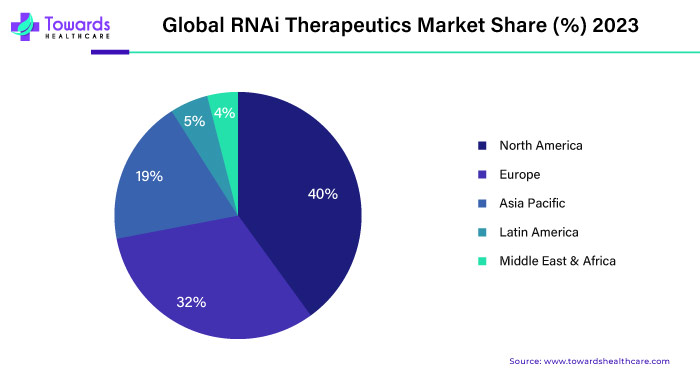
The Asia-Pacific region presents opportunities for growth in the RNAi therapeutics market, driven by factors such as increasing healthcare expenditure, expanding biopharmaceutical industry, and rising prevalence of chronic diseases. Countries like China, Japan, South Korea, and India are investing in biotechnology research and development, including RNAi-based technologies. Regulatory frameworks for RNAi therapeutics are evolving in the region, with authorities working to streamline approval processes and foster innovation.
Competitive Landscape
The competitive landscape of the RNAi therapeutics market is characterized by various companies and research institutions actively developing and commercializing RNA interference-based therapies. These entities compete in technology innovation, research and development pipelines, intellectual property, market access, and strategic partnerships. Emerging companies and startups are entering the RNAi therapeutics market with innovative technologies and therapeutic candidates. Collaborations between academia and industry are joint in the RNAi therapeutics space, facilitating technology transfer, access to funding, and expertise exchange. Companies with robust patent portfolios may have a competitive advantage in market exclusivity and the ability to enforce their intellectual property rights.
Recent Developments
- In January 2023, the US FDA recognized Moderna's new mRNA vaccine, mRNA-1345, labeling it a Breakthrough Therapy. This vaccine aims to protect adults aged 60 and above from a specific type of respiratory disease caused by RSV infection.
- In September 2022, Alnylam Pharmaceuticals, Inc. received approval from the European Commission to market their RNAi therapy, AMVUTTRA. This treatment is designed for adults with hereditary transthyretin-mediated (hATTR) polyneuropathy in stage 1 or stage 2.
Market Players
- Alnylam Pharmaceuticals, Inc.
- Novartis
- Arbutus Biopharma
- Arrowhead Pharmaceuticals
- Novo Nordisk (Dicerna Pharmaceuticals)
- Sirnaomics
Market Segments
By Type
- siRNA
- miRNA
By Application
- Oncology
- Cardiovascular Disease
- Infectious Disease
- Diabetes
- Neurology
- Other Applications
By Development Stage
- Preclinical Research
- Clinical Trials
- Approved Drugs
By Geography
- North America
- Europe
- Asia Pacific
- Latin America
- Middle East and Africa
Acquire our comprehensive analysis today @ https://www.towardshealthcare.com/price/5115
You can place an order or ask any questions, please feel free to contact us at You can place an order or ask any questions, please feel free to contact us at sales@towardshealthcare.com
Gain access to the latest insights and statistics in the healthcare industry by subscribing to our Annual Membership. Stay updated on healthcare industry segmentation with detailed reports, market trends, and expert analysis tailored to your needs. Stay ahead of the curve with valuable resources and strategic recommendations. Join today to unlock a wealth of knowledge and opportunities in the dynamic world of healthcare: Get a Subscription
About Us
Towards Healthcare is a leading global provider of technological solutions, clinical research services, and advanced analytics to the healthcare sector, committed to forming creative connections that result in actionable insights and creative innovations. We are a global strategy consulting firm that assists business leaders in gaining a competitive edge and accelerating growth. We are a provider of technological solutions, clinical research services, and advanced analytics to the healthcare sector, committed to forming creative connections that result in actionable insights and creative innovations.
Browse our Brand-New Journals:
https://www.towardspackaging.com
https://www.towardsautomotive.com
Web: https://www.precedenceresearch.com
For Latest Update Follow Us: https://www.linkedin.com/company/towards-healthcare
Get Our Freshly Printed Chronicle: https://www.healthcarewebwire.com


Legal Disclaimer:
EIN Presswire provides this news content "as is" without warranty of any kind. We do not accept any responsibility or liability for the accuracy, content, images, videos, licenses, completeness, legality, or reliability of the information contained in this article. If you have any complaints or copyright issues related to this article, kindly contact the author above.
